Reclaimed Playtime
General Project Details
Role:
3D Modeller, Visual Artist, Environment Designer, Narrative Writer
Team Members:
Grace Tan, Erin Teply, Michael Su, Monica De Mesa
Tools:
Unity, Blender, GitHub
Elapsed Time:
5 weeks (November 2023 - December 2023)
Goal:
5-minute short VR experience.
Overview
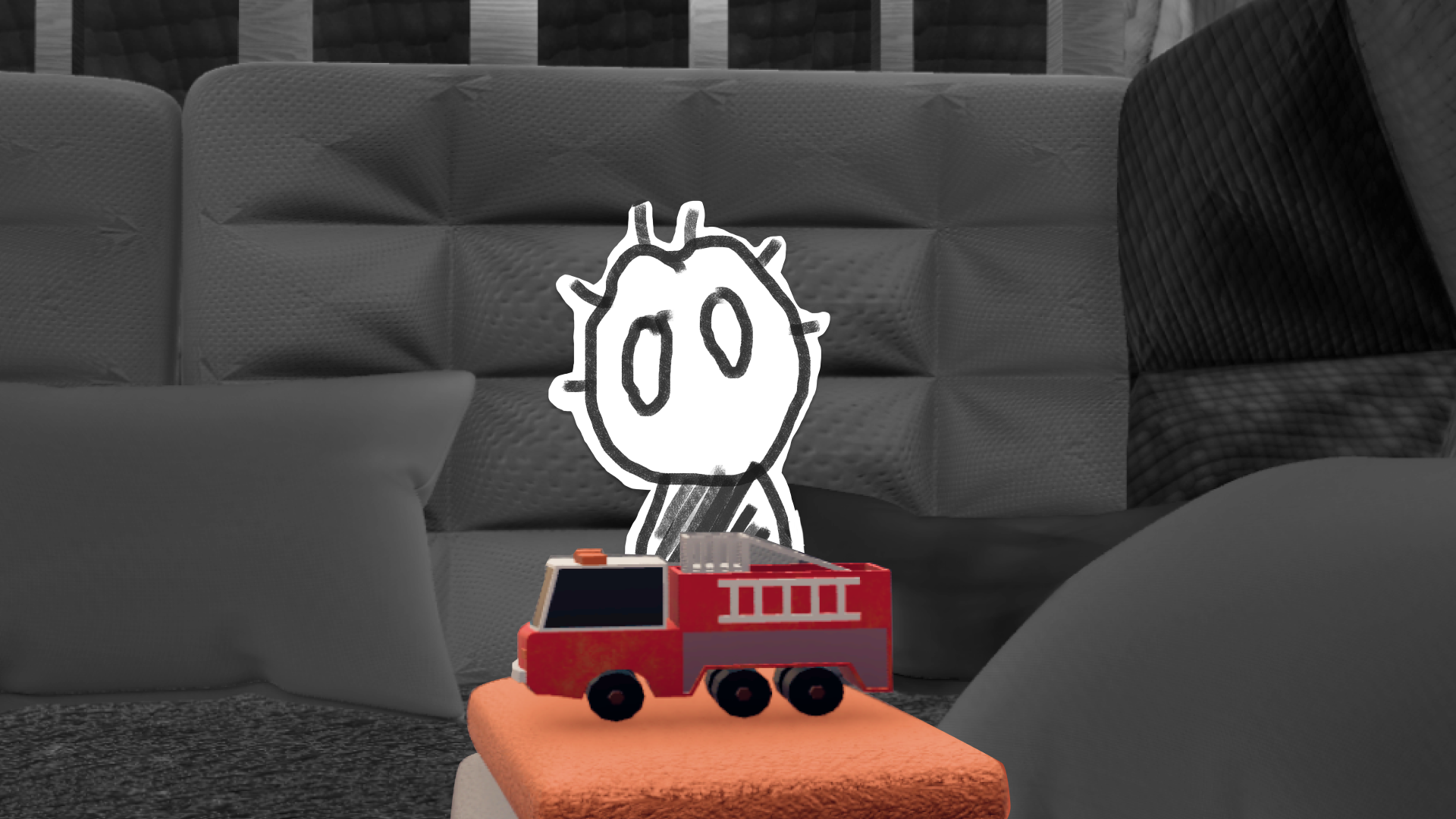
Reclaimed Playtime is a short virtual reality(VR) experience that I produced as part of a team of five for a course on immersive environments. The experience, as shown in the walkthrough video in Figure 1, takes the perspective of a burdened individual who must fix broken toys to overcome childhood trauma. Starting in a greyscale environment with a blocked entrance, healing is represented by colour as each toy the player repairs reveals a new portion of the colour spectrum, culminating with the player seeing all the colours of the environment and gaining the ability to leave the space. While occupying several roles throughout the project, my most significant role was as the primary 3D modeler and an environment designer.
Ideation
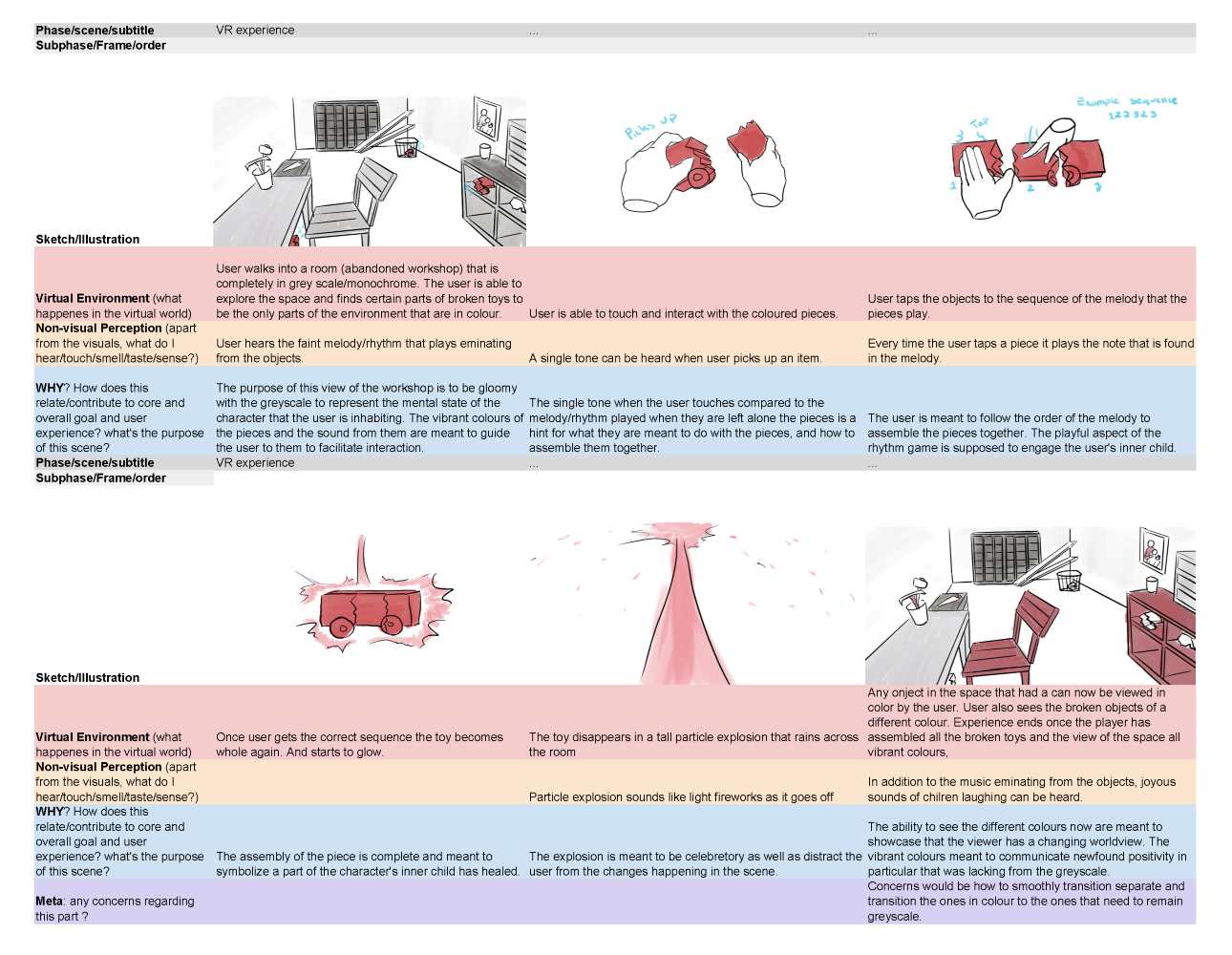
The ideation phase of this project was particularly chaotic and tumultuous as the project requirements, scope and completion timeframe were all in flux due to the month-long strike of SFU’s Teaching Support Staff Union, which both the course’s teaching assistant and instructor were a part of. As a result, the concept was constantly shifting and pivoting to accommodate the new information about the project requirements when they became available. Figure 2 is a storyboard I drew of the initial version of the concept, which featured the key colour-changing interaction that would appear in the final product.
Through refinement, the team wanted to focus more on environmental storytelling, so the more complex puzzle-oriented interactions featured in the initial storyboard were discarded. With this shift in focus, the environment changed from the workshop shown in the storyboard to a pillow fort to emphasize and explore a child’s perspective.
Asset Creation
During production, I was part of a 3-person subdivision of the team tasked with finding/creating assets for the experience. As part of this team, my primary responsibilities were designing and modelling the teddy bear prop that would be used to expose the purple spectrum of colour in the experience, as well as the overall pillow fort structure.
Bear
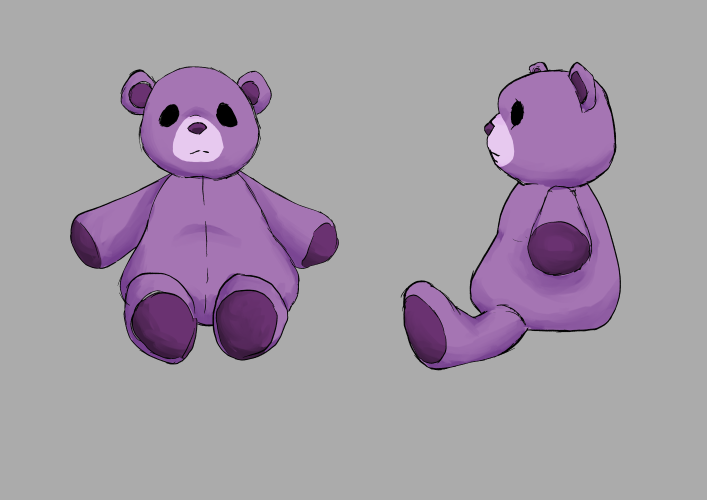
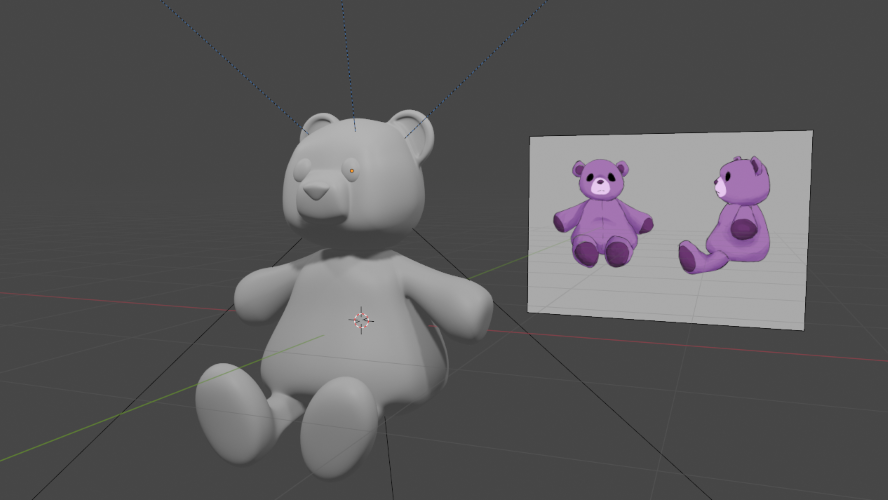
Figures 3 and 4 show the initial design sketch of the bear and its modelling process. The modelling process was completed using box modelling in Blender. The most enjoyable processes in creating the Bear were the unwrapping and texturing process, which communicate the history of the object. My approach to UV unwrapping was contrary to how I would usually approach the process, as I made sure that the seams were visible so that the player would understand the construction of the sewn, plush toy. To texture the bear, I stuck with a few knit textures that I had found online, altering their colours and procedurally adding splotchy dirt stains on the fabric to indicate its condition. Throughout the texturing process, I became well acquainted with the process of texture baking within Blender, which would serve me well in other projects. Figure 5 is a rendering of what the bear looked like after texturing.
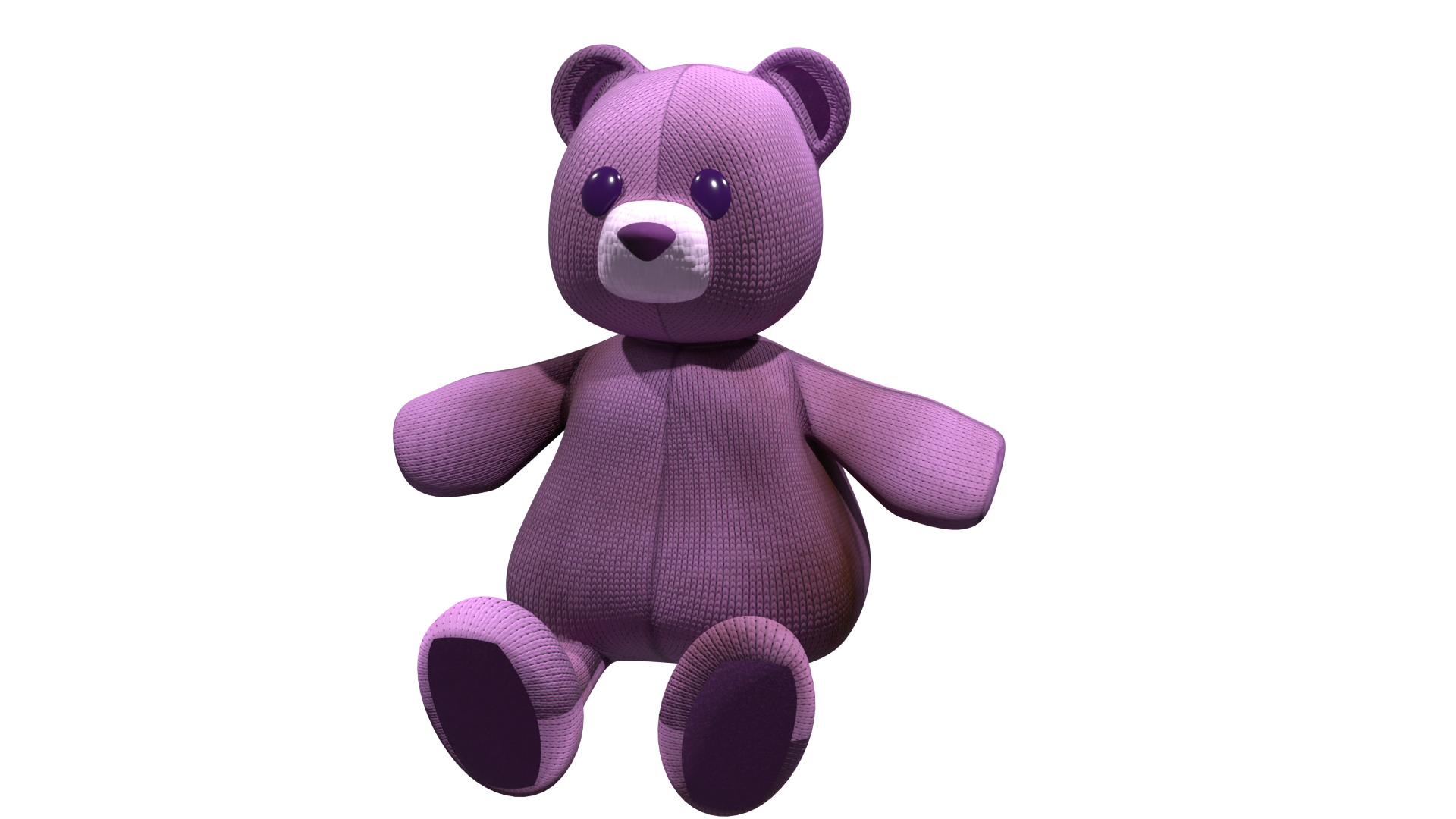
Following the iteration in Figure 5, small tweaks were made, including the addition of bandaid models that would mould to the outside of the model to support a very direct representation of the pain that the perspective character experienced. This model also needed a separate version where the head and body were separated to facilitate the “fixing” interaction of the experience.
Pillow Fort
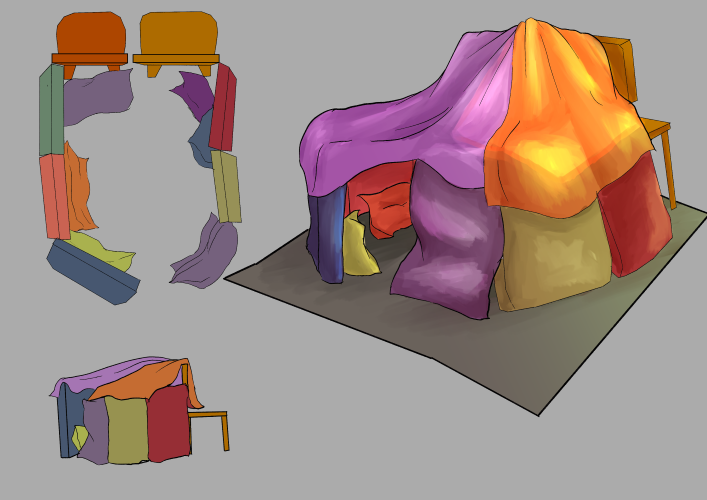
The pillow fort was my biggest contribution to the project, as was the environment in which the experience took place. Figure 6 shows the initial sketched design of the pillow fort with the overall shape, components and colours that it will contain. In this design sketch, I wanted to ensure that each of the colour subsets was equally represented in the space so that the colour changes would be noticeable to the player.
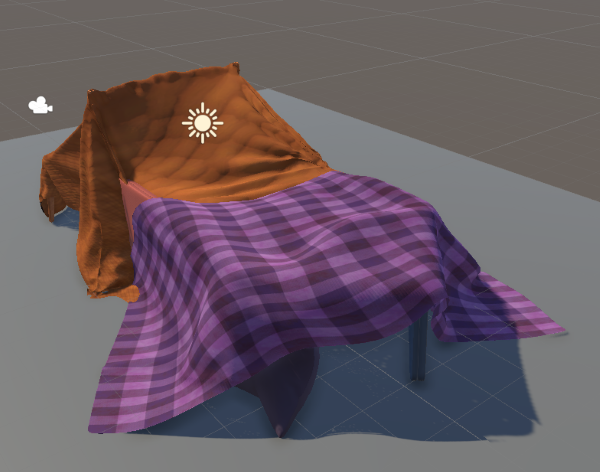
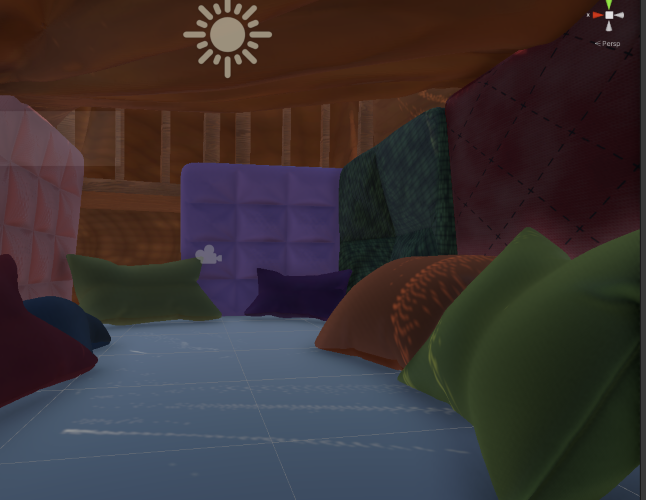
Figures 7 and 8 show the exterior and interior of the initial iteration of the pillow fort after it was imported into Unity. Throughout the pillow fort modelling process, I became well acquainted with Blender’s cloth simulation system, which I used to simulate inflated pillows and create the natural curves of the blanket that hang across the entire structure.
Preventing Vertigo
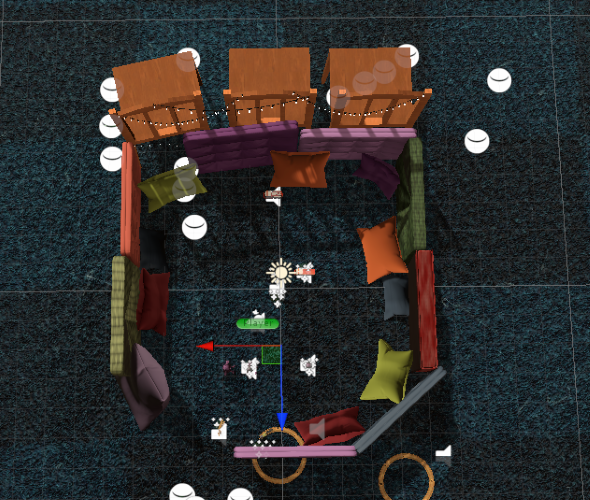
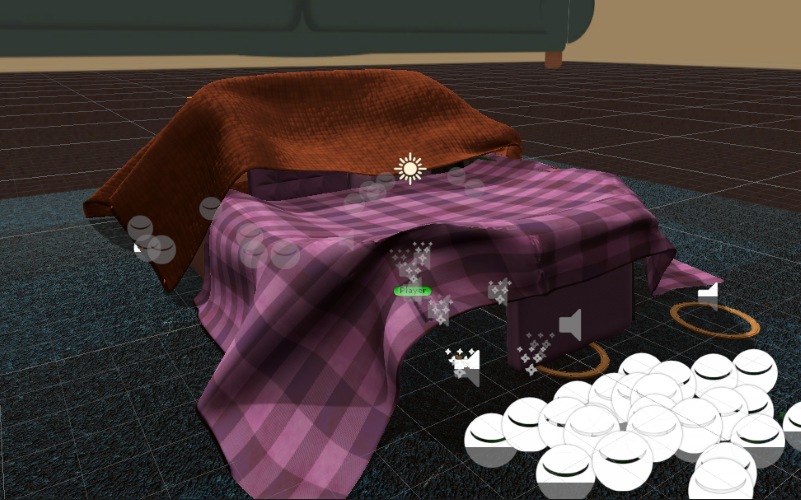
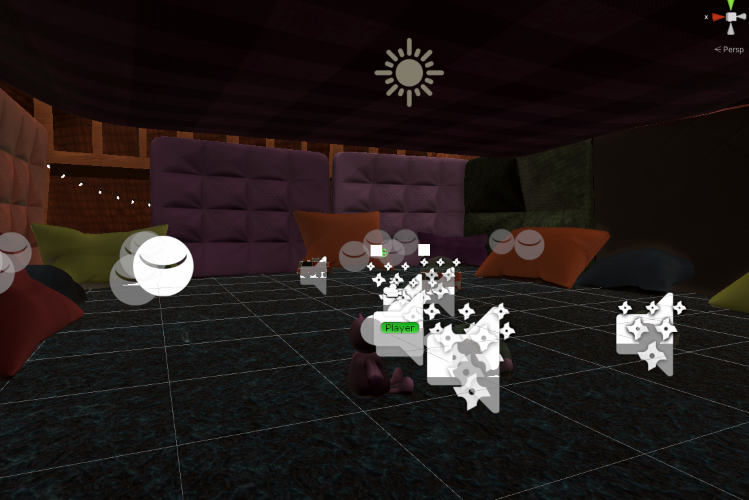
An unexpected challenge came when testing the fort using the VR headset within Unity, where navigating the space induced feelings of vertigo for the player. After consulting with our teaching assistant, he suggested that one cause may be the narrow width of the fort, as the confined space may conflict with the player’s proprioception. Though there were some narrative benefits to having a narrow pillow fort, ultimately, this was an issue of greater importance. Thus, the pillow fort was widened and the ceiling blankets were remodelled to accommodate the larger width seen in Figures 9, 10, and 11.
Reflection
I consider this a very valuable project, as it was my first time using VR, let alone creating for the medium. Though this was quite a new medium, my major takeaways from this project revolved around learning and practicing soft skills of patience, adaptability, and managing priorities. As stated previously, the external circumstances of the strike led to significantly shortened timelines for working on the project. This required adaptability by the whole team to continuously pivot ideas and some of their complexity to accommodate the shortened timeframes. Though a frustrating process, this ultimately helped us solidify what we collectively wanted as the core of the experience and set our priorities accordingly. It was gratifying to see that the participants could receive the experience we intended, as shown in Figure 12. That experience of finding ways to adapt while maintaining that consistent core of the idea was very valuable in understanding what is important in making an experience like this one.
Additional Information
If you would like to learn more about this specific project, below are some additional resources.
- Project Website: https://monicalouisedemesa.wixstudio.com/iat445-team1-2